
Search Website
Research Opportunities
Research Opportunities
Research Opportunities
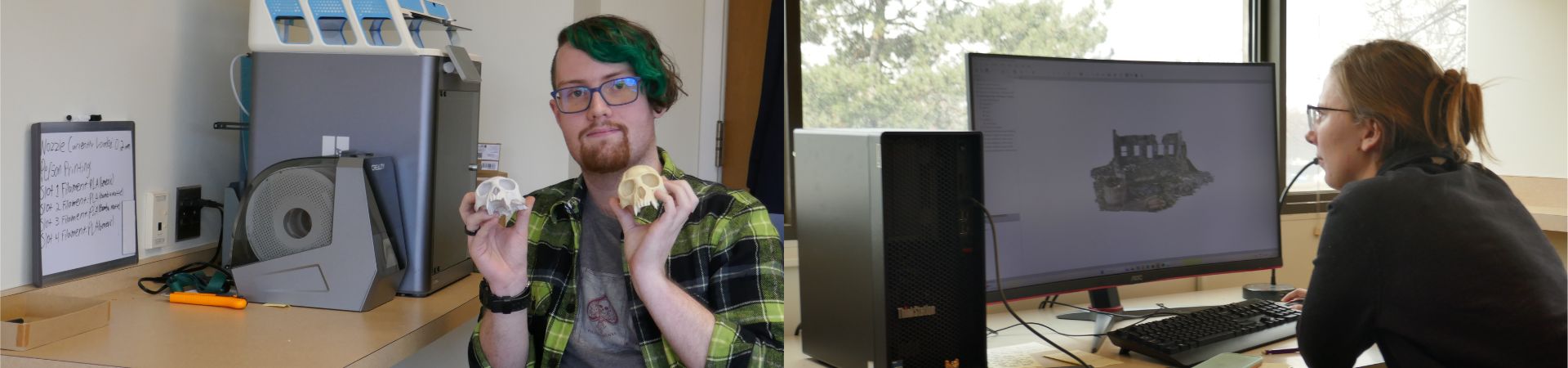
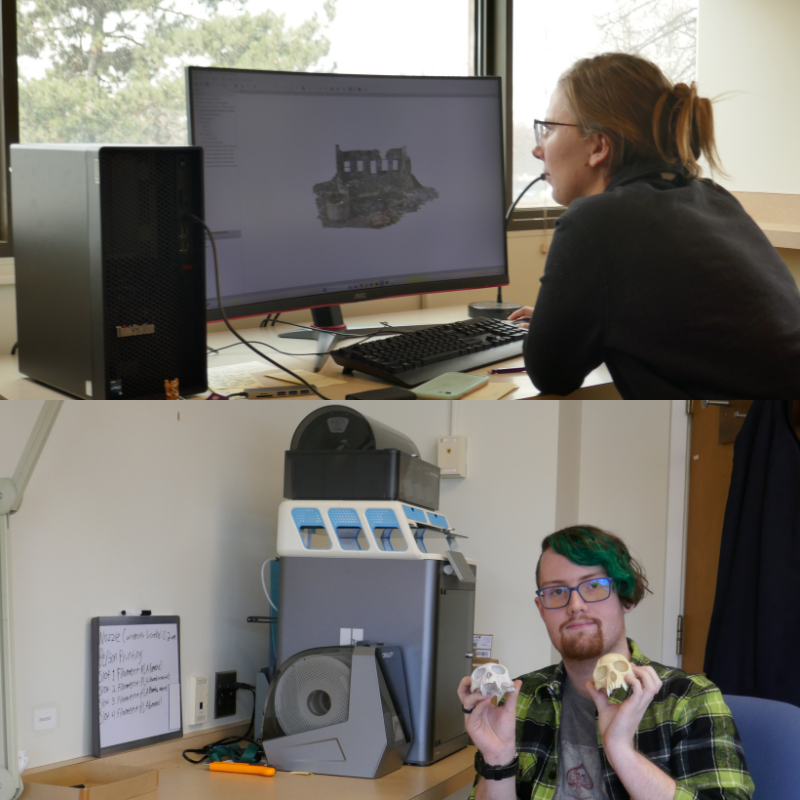
The Department of Anthropology offers many opportunities for undergraduate students to engage in research, both inside and outside the classroom. Whether through dedicated research-methods courses, summer field schools, work-study positions, or volunteering in a faculty member’s lab, there are many ways to gain hands-on research experience as part of your degree.
We strongly encourage students to seek out these opportunities. A great place to start is by talking with your professors about ongoing projects, checking with the Undergraduate Office about work-study postings, or applying for a summer research position such as a University Summer Research Internship (USRI).
Courses with a Research Focus
Several of our courses are designed to give students direct training in research methods and hands-on research experience. These courses are a great option if you want to build practical skills in archaeology, linguistics, sociocultural fieldwork, or biological anthropology. Please visit our Course Offerings page to see which courses you can enroll in.
This course explores the archaeology of human migration — the material ways historic and contemporary movements shape our world. Topics include immigration, displacement, forced migration, diasporas, settler colonialism, and borders. Students critically engage with migration narratives, past and present, by examining archaeological sites alongside the myths that surround human movement today.
A survey of practical applications of linguistic theory. Topics may include the relevance of linguistic research to language teaching and learning, communication disorders, language policy development and language revitalization, translation and intercultural communication, media, law, business, communication technologies, and social justice.
This course provides students with a hands-on introduction to the identification, analysis, and interpretation of a range of archaeological artifacts, including lithics, ceramics, and organics. Students work directly with archaeological collections available for analysis.
This course explores the methodology of fieldwork in sociocultural anthropology, with an emphasis on actually doing what anthropologists do rather than just reading about it. Assignments focus on participant observation, including talking with people, observing their activities, and taking part in community life.
Anthropologists are trained with a unique set of knowledge and research skills that can be applied to urgent issues facing people and communities around the world. This course examines the ethics, theories, and methods of applied anthropology and the range of topics anthropologists can address.
This advanced course examines the critical issues and tensions of doing research with and for Indigenous peoples. Themes include Indigenous methodologies — including but not limited to oral histories — and decolonizing research.
Students elicit and record linguistic data from a native speaker of a designated language and then study its phonological and lexical-grammatical systems. Selected aspects of the language are analyzed in terms of current problems in linguistic theory.
An exploration of the role skeletal material plays in providing anthropological information. Emphasis is placed on the analytical techniques used in osteology and odontology, including measuring biological adaptability in archaeological populations, creating individual biographies, and reconstructing past cultural activities.
How a field research trip to Brazil opened new worlds
Summer Research Funding
University Summer Research Internships (USRIs)
USRIs provide funded opportunities for undergraduate students to work alongside faculty members on an active research project over the summer. This is an excellent way to gain mentored research experience, develop new skills, and explore whether graduate studies might be right for you.
Looking Ahead to Graduate Studies?
If your undergraduate research experience sparks an interest in continuing your studies, visit our Graduate Research page to find out about research opportunities at the MA and PhD level.